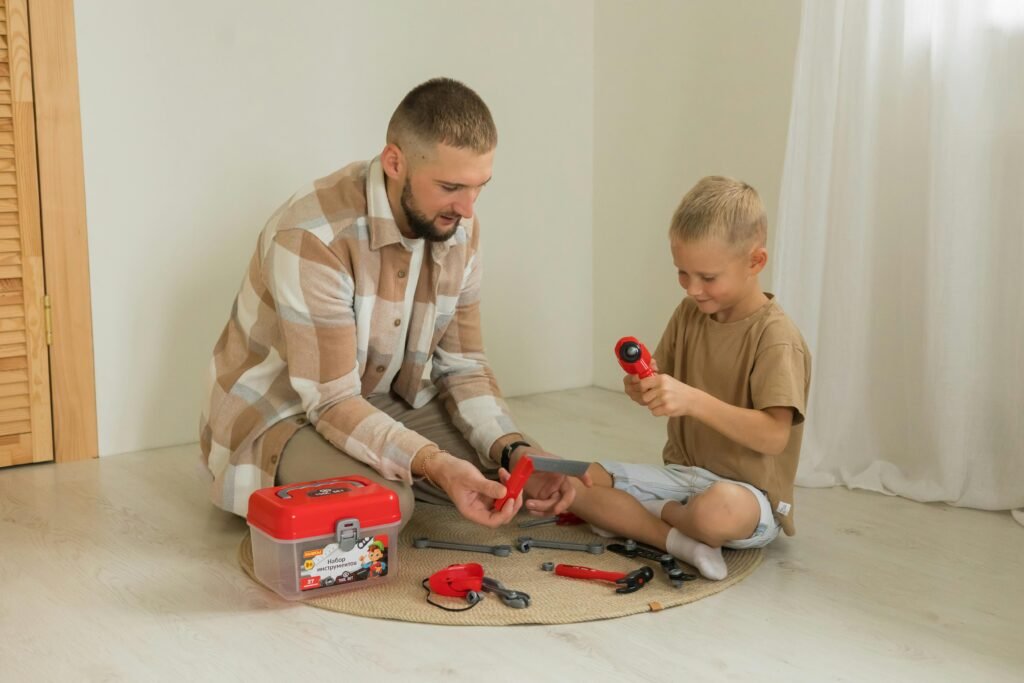
We have all been there. Your kid is restless, whining, or on the verge of a meltdown, and you need something fast. Not a 30-minute craft project. Not a trip to the store for supplies. You need something right now, with what you already have, that takes five minutes or less to set up and actually works.
The truth is, most of the time kids are not truly bored. They are stuck. They have hit a wall where their current activity (or lack of one) is not holding their attention, and they do not know how to shift gears on their own. That is where a quick reset activity comes in. It breaks the cycle, redirects their energy, and gets them engaged again without turning into a production.
These are 10 activities that take five minutes or less to get going. No special supplies, no elaborate setup, and no screens required. Just practical ideas you can pull out of your back pocket the next time you hear those two dreaded words.
Disclaimer: As with everything, every child and situation is different. Some of these will be home runs with your kid, and others might not land. The goal is to have a handful of go-to resets that you know work for your child, so you are never caught off guard.
1. The Scavenger Hunt Challenge
This one works almost every single time, and it requires absolutely nothing except your voice. Give your child a quick list of things to find around the house or yard. Keep it simple and specific.
Try something like: “Find me something red, something soft, something that starts with the letter B, and something that makes noise.” That is it. Four items. They will be off and running before you finish the sentence.
What makes this work is the combination of movement, thinking, and a sense of mission. Kids love having a task to complete, especially when it feels like a challenge rather than an instruction. You can adjust the difficulty based on age. For younger kids, keep it to colors and textures. For older kids, make it more specific or add a time limit.
Why it resets them: It shifts their brain from passive (bored, whining) to active (searching, problem-solving) in seconds.
2. The Drawing Challenge
Hand your child a piece of paper and a pencil or crayon and give them a specific prompt. The key word here is specific. Saying “go draw something” rarely works. But saying “draw the craziest animal you can imagine” or “draw what our house would look like on the moon” gives them a starting point that sparks creativity.
You can also do timed challenges. “You have three minutes to draw as many different types of food as you can.” Kids love the urgency and it removes the pressure of making something perfect.
If you have coloring books on hand, this is another great moment to pull them out. Sometimes a structured coloring page is exactly the reset a child needs. It gives them something concrete to focus on without having to generate an idea from scratch.
We keep a small bin of coloring supplies and a few Coloring Adventure Coloring Books by Remington Grey in our living room for exactly these moments. When the energy gets chaotic, pulling out a coloring book and sitting down together for even five minutes can completely change the mood.
Why it resets them: Drawing engages the creative side of the brain and naturally slows down a child’s energy. It is a calm activity that still feels productive.
3. The Floor is Lava (or Any Movement Game)
Sometimes the reset your kid needs is physical. If they have been sitting too long, doing homework, watching something, or just hanging around, their body needs to move. A quick burst of physical activity can completely flip their mood.
“The Floor is Lava” is the classic, but any movement-based game works. Try these:
- “How many jumping jacks can you do in 30 seconds?”
- “Can you hop on one foot from the kitchen to the living room?”
- “Let us see who can hold a plank the longest.”
- “Do 10 animal walks: bear crawl to the door, crab walk back.”
The point is not to exhaust them. It is to give their body a release so their brain can reset. Even two or three minutes of active movement can change the trajectory of a rough afternoon.
Why it resets them: Physical activity releases pent-up energy and triggers endorphins. It is the fastest way to shift a child from cranky to engaged.

4. Build the Tallest Tower
Grab whatever building materials you have. Blocks, LEGO bricks, magnetic tiles, playing cards, even plastic cups from the kitchen. Give your child one simple challenge: build the tallest tower you can.
That is the entire setup. One sentence, one goal, and they are off. The beauty of this activity is that it naturally creates a cycle of building, watching it fall, and trying again. That cycle is deeply engaging for kids because it combines problem-solving with a tangible result.
You can add variations to keep it fresh. “Build the tallest tower using only one hand.” “Build a tower that can hold this stuffed animal on top.” “Build a tower taller than your sister.” (Use that last one carefully.)
Why it resets them: It gives them a clear, achievable goal with immediate feedback. Success feels great, and failure (the tower falling) is actually fun.
5. The Question Game
This is a zero-setup activity that works anywhere, anytime. You ask your child a creative question, they answer, and then they ask you one. That is the whole game.
The key is asking questions that are fun and imaginative, not factual. Skip “What is the capital of France?” and try these instead:
- “If you could have any superpower, but only for one day, what would you pick?”
- “If you were in charge of dinner for a whole week, what would you make every night?”
- “If our dog could talk, what do you think he would say right now?”
- “Would you rather be able to fly or breathe underwater?”
Kids light up when they get to share their opinions and ideas, especially when there is no right or wrong answer. This activity also builds conversation skills and gives you a window into how your child thinks, which is a bonus.
Why it resets them: It redirects their attention from whatever was causing frustration and makes them feel heard and valued.
6. Kitchen Helper (Micro Edition)
This is not “help me cook dinner.” This is giving your child one tiny, manageable kitchen task that makes them feel useful and important.
Try: “Can you wash these five strawberries for me?” or “Can you tear up this lettuce for our salad?” or “Can you count out 10 crackers and put them on a plate?”
For older kids, you can level it up. “Can you measure two cups of rice?” or “Can you peel these three carrots?”
The task should take no more than three to five minutes. The goal is not to get help with dinner (though that is a nice side effect). The goal is to give your child a sense of purpose and accomplishment. Kids who feel useful are rarely bored.
Why it resets them: It shifts them from feeling aimless to feeling needed. Contribution is a powerful motivator for children at any age.
7. The Freeze Dance
Turn on music. Any music. Dance. When the music stops, everyone freezes. If you move, you are out. This is a staple for a reason.
You do not need a speaker or a playlist. Your phone playing a song works perfectly. You can even hum or clap a rhythm and have your child dance to that. The sillier you make it, the better it works.
The real magic of freeze dance is that it combines physical movement, listening skills, and laughter into one simple game. And it naturally involves you, which is what most kids actually want when they say they are bored. They want your attention and interaction, even if just for a few minutes.
Why it resets them: Laughter and movement together are the ultimate mood reset. It is nearly impossible to stay in a bad mood while dancing.
8. Sorting and Organizing Challenges
This one sounds boring to adults, but kids find it surprisingly satisfying. Give them a collection of items and ask them to sort by a specific criteria.
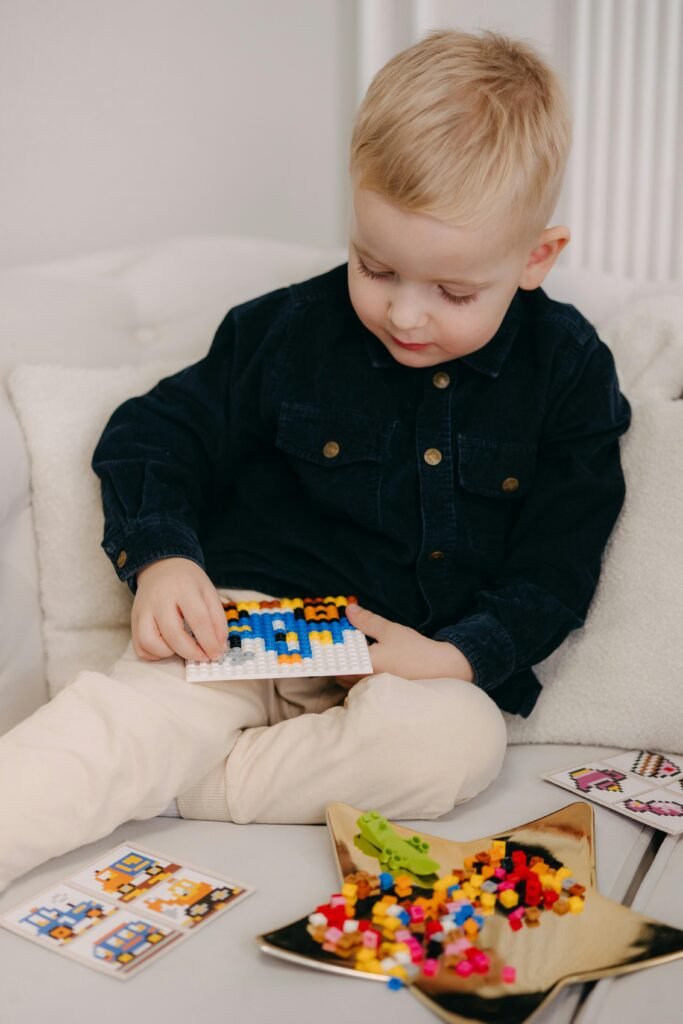
A handful of coins: sort by size, then by color, then by value. A pile of LEGO bricks: sort by color. A drawer of socks: match the pairs. A jar of mixed buttons, beads, or craft supplies: sort by type.
For younger children, keep the categories simple (big vs. small, red vs. blue). For older kids, you can introduce multiple categories or ask them to come up with their own sorting system.
The reason this works so well as a reset is that sorting is a naturally calming, focused activity. It requires just enough concentration to redirect a wandering mind without being stressful.
Why it resets them: It taps into kids’ natural desire for order and gives them a task with a clear beginning, middle, and end.
9. Story Starters
Start a story with one sentence and let your child take it from there. The more absurd the opening, the better.
Try these:
- “One morning, you woke up and your bed was floating in the ocean…”
- “A dinosaur walked into our kitchen and opened the fridge…”
- “You looked out the window and realized our house was now on top of a mountain…”
Your child continues the story for as long as they want. You can go back and forth, each adding one sentence at a time, or let them run with it solo. Some kids will give you two sentences. Others will build an entire epic adventure. Both are great.
For kids who prefer drawing over talking, let them illustrate the story instead of telling it. Hand them the starter sentence and a blank piece of paper, and let them draw what happens next.
Why it resets them: It activates their imagination, which is the opposite of boredom. Once a child starts creating, the restlessness usually disappears.
10. The Sensory Reset
Sometimes a bored or cranky child just needs a change in sensory input. A quick sensory activity can be surprisingly effective at calming and refocusing.
Simple options that take almost no setup:
- Fill a bowl with warm water and let them splash their hands in it. Add a drop of dish soap for bubbles.
- Hand them a piece of Play-Doh or modeling clay to squeeze and shape.
- Wrap them in a blanket like a burrito and give them a gentle squeeze (this is calming for many kids).
- Let them run their hands through a bin of dry rice or dried pasta.
- Give them an ice cube to hold and watch it melt.
These seem almost too simple, but that is the point. When a child’s nervous system is overstimulated or understimulated, a quick sensory shift is often the fastest path back to calm.
Why it resets them: Sensory input directly regulates the nervous system. It can calm an overstimulated child or energize an understimulated one.
How to Use These Effectively
A few practical tips to make these reset activities work consistently:
Know your child’s patterns. Pay attention to when boredom and meltdowns tend to happen. For most families, it is the late afternoon stretch between after school and dinner. If you know the window, you can proactively offer a reset activity before things go sideways.
Keep supplies accessible. The activities above are intentionally low-prep, but they work even better when the basics are within reach. A bin with coloring supplies, a few building toys, and some paper means you can launch any of these in under a minute.
Rotate your go-to activities. If you use the same reset every time, it loses its effectiveness. Keep three or four in your rotation and cycle through them so each one still feels fresh.
Participate when you can. Most of these activities can be done independently, but they work significantly better when you join in for even a minute or two. Dancing together, asking each other questions, or starting a story side by side turns a solo activity into a connection point.
Do not overthink it. The goal is not a perfect Pinterest moment. The goal is a five-minute redirect that shifts your child out of a funk. If it buys you 10 minutes of peace afterward, that is a win.
Final Thoughts
Boredom is not the enemy. In fact, a certain amount of boredom is healthy and helps kids learn to self-entertain. But when boredom turns into whining, fighting, or meltdowns, a quick reset can save the moment for everyone.
These 10 activities are designed to be fast, easy, and effective. You do not need to plan ahead, buy anything, or set aside a large chunk of time. You just need to recognize the moment, pick an activity, and redirect.
Keep this list bookmarked or saved on your phone. The next time your child hits that wall, you will have something ready to go. And more often than not, five minutes is all it takes to turn things around.
The best parenting tools are the simplest ones. A quick reset today can prevent a big meltdown tomorrow.