Being a great dad doesn’t come from grand gestures — it comes from being present, and small, consistent habits repeated every day. The problem? Most dads already feel stretched thin.
The good news: you don’t need more time. You just need refine/enhance, or implement better habits.
These simple daily habits are realistic, proven, and easy to work into your existing routine. Whether you’re juggling work, school drop-offs, or bedtime battles, habits and routines can enhance behavior and/or family dynamic.
Disclaimer: Keep in mind these are ideas/guidelines. Everyone has a different situation, and what works for one dad, may not work for another. Find what fits, implement, and refine. As a dad, we are always adapting, learning, and evolving.
1. Wake up before your kid(s)
This buffer reduces stress and sets the tone for the day. It gives you some “me” time, which you can fill based on what you need. For me, I can drink my coffee, plan what major tasks need to get completed, and complete any unfinished thoughts. Once you start your day, it can get hectic/chaotic, but taking this time in the morning, can absolutely allow the rest of the day to go a little bit more smooth.
2. Say good morning with eye contact
Not only does this make a simple connection moment kids remember, it puts your teaching/preaching of this same gesture into practice. We know how important it is to make eye contact when speaking to people, and this is a common lesson that we teach our kids, which adds value to this.
3. TRY to Avoid your phone
Be present before the world gets loud. This habit was originally, going to be specifically for the morning, however, it is valuable throughout the day. Phones, tablets, and computers are already a large part of our daily life. It seems almost impossible to not use them. With that being said, not being on a device allows us to connect with our kids, and be present. Additionally, depending on how you view screen time with your kids, this will show them that a screen is not needed, and human interaction can be just as entertaining.
4. Do one small act of service
Pack lunches, set out clothes, or prep breakfast. The act of service doesn’t necessarily have to be for your kids, it can be something that helps out your partner. Doing small acts of service like this will not only make you feel good, but your family will see and feel the positive effects as well. Your kids will recognize this and it will reinforce the importance of helping and working as a team.
5. Verbalize the plan for the day
Kids feel safer when they know what’s coming. Additionally, they will know what to expect, the goals for the day, and maybe even something to look forward to. The first stop or task of the day might be boring, but there is an item in that plan that they are excited for. Your kids may even help make sure the plan gets completed. If you are spending too much time in a store, and your kid(s) say when are we going to a specific place, it may help get the plan back on track.
6. Apologize when you mess up
It teaches accountability, among many other great things. This is another moment of your teaching/preaching getting put into practice. Being accountable for your actions is a great trait, and something that is not always easy to teach our kids, since it comes from actions/scenarios such as apologizing. It’s inevitable that we will make a mistake at some point. When we own up to it and apologize, it has immense value.
7. Control reactions before correcting behavior
Kids are always watching us and pick up A LOT from doing so. This one is not easy, but is extremely important. Whether the reaction is due to something that happens in traffic, watching a game on tv, discussing an event that happened at work, or after repeating yourself for the 10th time for your kid(s) to pick up their toys…we should always think about our actions/reactions before we do or say something. Our kids will see how we handled the situation, and will learn what is an acceptable response. As mentioned above, apologizing is important, however, the initial emotional intelligence outweighs the recovery in some cases.
8. Praise effort, not just results
This builds resilience. It is really easy to say “Great job!” when our kids do something correctly or win a game. However, there is a lot more effort and learning that occurs to get to the successful outcome. Praising effort lets our children know that we took notice to the effort and agree with how they performed, no matter the outcome. Now they will get the reinforcement to try again, and the next time they will have more CONFIDENCE.
9. Keep expectations age-appropriate
We always want to see our kids do well and succeed, and we know it is our responsibility to teach our kids and provide them with all of the necessary tools to succeed. The main thing we need to keep in mind is, they are learning. If we are teaching our children to ride a bike at the age of 2, we shouldn’t expect them them to immediately succeed. They are still developing and adjusting to their motor skills. As they keep practicing, and growing, as long as we continue to teach them the basics, proper form, and provide tips, they will succeed. We need to keep age in mind, set the proper expectation for their age, react appropriately, and praise their efforts.
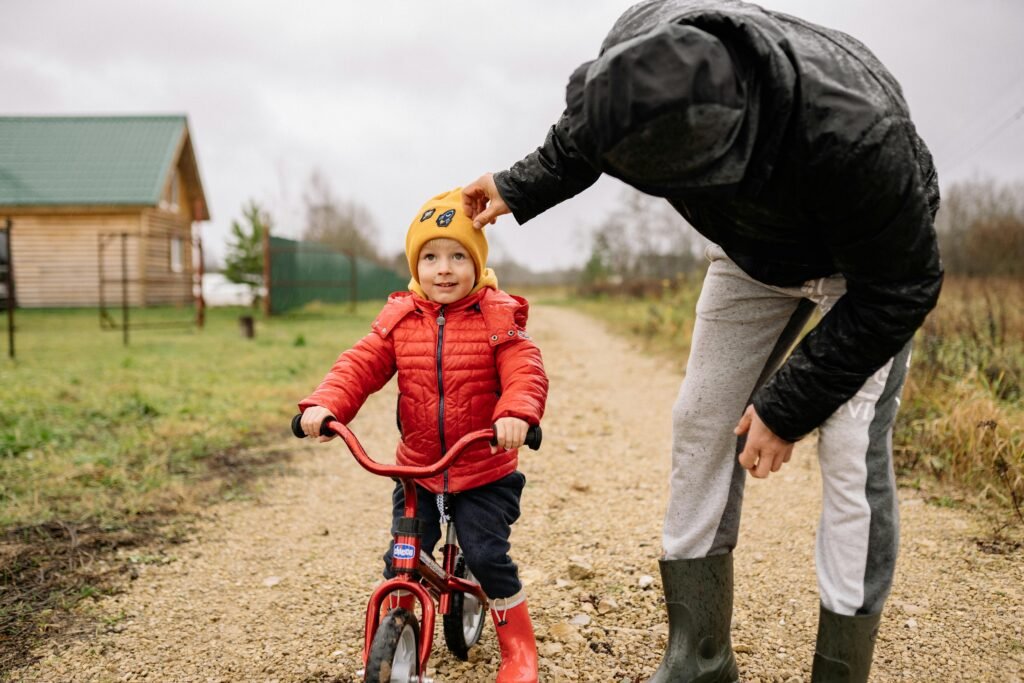
10. Laugh more — on purpose
Play builds connection faster than lectures, and laughing is contagious! As stated previously, our children are always watching us, and learn so much that way. The more we laugh, will encourage them to laugh. It will make the environment fun, not serious, and will naturally bring about more interaction. It can even be the catalyst for core memories.
Laughing is contagious!
11. Decompress before walking in
Our days can be long and stressful. If you commute to work, sometimes the ride home is not enough. There could have been traffic, you may have had a work call, or some other factor, you may not have decompressed. When you get home, try sitting in your car for 2 minutes. That could be in silence, or listening to your favorite song. Whichever method will get your mind off the work day, give it a try. The main thing is, have a clear mindset when you see your family. The habit that you want to avoid (or remove) is you family expecting you to still be stressed or in a bad mood.
12. Greet your kids before checking devices
After a long day, we may want to check social media, watch TikTok/Youtube, or play a mobile game. DON’T. At least not immediately when you get home, or finally see your kids. Give them your attention. Talk to them and show them that they come first. This habit not only shows them that screens are not the most important thing, but it shows them you care. Doing this everyday, can cause them to open up more and more, building the their trust that they can share anything with you.
13. Ask (AT LEAST) one meaningful question
Skip “How was school?” and ask “What made you laugh today?” When asking standard or general questions, kids can get into a habit of responding with “good”, or some other general question. Asking meaningful or non-general questions can facilitate better answers, and provide more information that fosters conversation.
14. Be physically present
This does not just mean physically in the room and sharing the air. A hug, high-five, or sitting on the floor matters more than words. As we may know or have picked up on, sometimes our words go in one-ear and out the other, especially if you are battling with a toy that has their attention. Incorporating physical actions now puts you in the same bubble or universe as what they are currently doing. If they are playing with a toy, using their imagination, sitting on the floor now makes you a character in their adventure.
15. Create a daily transition ritual
Snack time, walk, or story at a certain points in the day can be massive. Consistent routines build trust…and something to look forward to. When the weather is nice, go for a walk after dinner. Not only is the physical exercise great after eating, but it is something that you kid(s) will look forward to. Reading a story at bedtime is another great habit. Not only does this help with reading, imagination, vocabulary, etc., but it creates another consistent routine that is a great way to end the day.
16. Eat together when possible
Even a few nights a week helps bonding. If possible, this is even better at a table, and without screens. This can have a very large, positive outcome. Eating together without distractions helps conversation, and provides a perfect opportunity to communicate. Additionally, this habit can expand when going out to eat as well. It will set the trend and expectations of no screens while eating, and what the appropriate behavior and mannerisms should be.

17. Limit background screens
This was touched on a bit in the previous habit, however, limiting screen time at night can be very beneficial. Not only does it encourage communication/conversation, but also expends remaining energy through playing with toys, and reduces blue light which can negatively effect sleep.
18. Participate in bedtime routines
Even if brief, it matters. Getting children ready for bed can be exhausting, and there are a lot of steps, but participating in those routines can strengthen bonds. You can even create rotating routines with your partner. This can be alternating who gives a bath, each bath time. Or if you have multiple kids, alternate each night which kid you put to bed. Whichever method, or to what capacity, have fun with it and make it enjoyable. It is the last interaction of the day, which holds a lot of weight.
19. End the day with encouragement
Extending the final sentiment of the previous habit, one final affirmation would be a great thing to implement as well. This will make your kid(s) happy, build their confidence, and help remove any doubts or negative thoughts. This way, they won’t subconsciously dwell on it while they rest.
One sentence: “I’m proud of you.”
20. Stick to predictable bedtimes
Kids thrive on structure and routines, and it removes chaos and doubt. We know bedtime can be stressful, and bring out tantrums due to fatigues. However, keeping the bedtime the same can help alleviate some of this. Kids will know bedtime is coming and will subconsciously start preparing. Additionally, it will help build some of these other habits, and allow predictability. We learn how long our kids sleep, which means we can plan the beginning of our days accordingly, and implement morning habits.
21. Move your body daily
Exercise and movement are not just beneficial physically, but mentally as well. Being sedentary can bring on depression, which dads can already struggle with, especially post-partem. Getting some exercise, whether that is going for a walk, jog, push-ups, sit-ups, or weightlifting, your mind and body will benefit greatly. Additionally, a great way to incorporate physical movement, is playtime, as it pairs with bonding.
22. Read or learn something small each day
Growth models growth. Not only do we want to avoid becoming stagnant, but consistently learning and growing provides us with more knowledge we can share with our children. Plus, if our children see us reading, learning, or tinkering, they will be encouraged to do the same.
23. Talk positively about your kids
They hear more than you think. If they hear you talking positively about them, it will empower them. This will make them feel great, show that you are paying attention, give them confidence, and making you happy and proud. Which, in turn, can improve their behavior and actions, which will then make you happy. It can create a wonderful circle.
24. End the day with reflection
Ask: What went well today? What could I have done better? Could I have handled that better? This can be a great catalyst to adopt some of the other habits mentioned above. Through this reflection, you can make resolution to handle reactions better, or a new method of teaching a new skill.
25. Protect your sleep
You can’t pour from an empty cup. Sleep is the best thing you can do for your mind and body. You heal when you sleep. If you are sleep deprived, it can greatly effect your mood, thinking, how you handle situations, and your amount of physical involvement. If you are well rested, you have more energy to use and share with your family. If possible, it could be good to set a routine with your partner. If you child or children wake up during the night, set shifts for who is responsible during specific times during the night. If you are a night owl and go to bed late, maybe cover the first shift (bedtime to 1:30AM). This way, you don’t have to feel guilty, and essentially, all parties can get sleep.
Great dads aren’t perfect — we’re consistent. Start with just one habit, then build from there.
👉 Want more simple, realistic dad advice like this? Subscribe to our weekly newsletter for practical wins you can actually stick to.